The IDES Minor is based on an 18-credit model.
12 credits come from the 3 core requirements listed below. The other 6 credits are electives, which can be taken at any time. Students can navigate the core sequence and the electives in multiple ways.
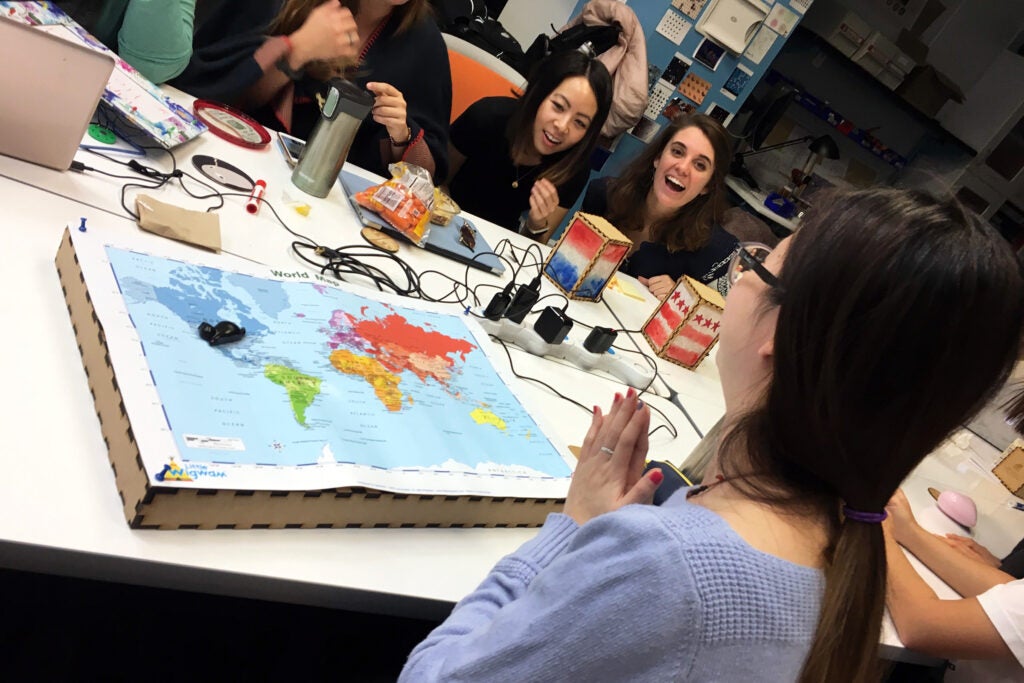

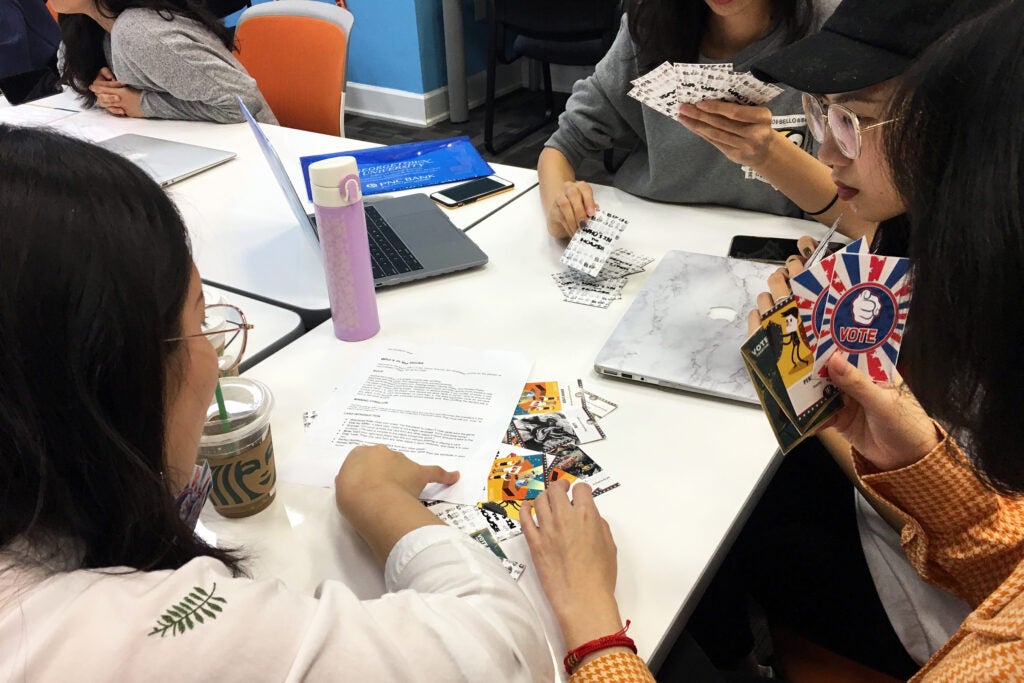
CCTP-5150: Introduction to Design Theory and Practice
(Spring Course, 3 credits)
Open to all graduate and undergraduate students. The course covers the basic theories and practices of design as a discipline and balances reading and discussion with hands-on artifact creation.
One- and two-week units introduce students to the fundamentals of the most important design subdisciplines.
CCTP-5555: Discovery Studio
(Fall Course, 6 credits)
Students work individually, in teams, and as a full group at various times as they use a design research process to engage a set of research questions centered around social, political, and technological trends in a domain of their choosing.
- As groups, students are responsible for organizing and facilitating design workshops with key stakeholders.
- As individuals, they follow a separate digital or material process to construct an artifact that embodies an outcome of that research.
- Where possible, partnerships with regional professional groups will provide real-world context for the work.
CCTP-5666: Design Rhetorics
(Spring Course, 3 credits)
Students enrolled in this course revisit and reflect on the process and products made in their Discovery Studio experience as they prepare for a “Spring Showcase” in which all projects are presented publicly as the final step in completion of the minor.
This course is a unique capstone experience that includes a number of important and unique features that truly make the course and minor stand out. The heart of this course is the effective communication of the design research and development done in Discovery Studio and should be taken in the following spring semester.
Students organize and prepare documentation on their Discovery Studio Project as a “process book” that begins with a design rationale, details the research process, and ends in a practitioner reflection. At the same time, they polish their design interventions and artifacts to present their work in various formats to different audiences, including the “Spring Showcase” open to the public, a lecture in the 5150 course, and a page on the program website.
Electives Requirements
In addition to the Core Sequence, all students must take 2 IDES electives. Elective courses are offered by affiliate faculty across the university as well as within CCT. A list of appropriate elective courses is provided below, and more can be added at the request of instructors or departments. Students who wish to add an elective that is not on the current list should discuss their intentions with the IDES program director(s) before taking the course. Not all electives are offered every year and students are encouraged to plan ahead and to consult with IDES faculty and their advisors to plot a course of study.
CCT Courses
CCTP-5042: Tech Entrepreneurship
CCTP-5015: Interaction Design
CCTP-5029: Professional Video Production for Multimedia
CCTP-5037: Diagrams & Dialogues
CCTP-5039: Technologies of Persistence
CCTP-5043: Data Visualization
CCTP-5046: Gaming the System
CCTP-5048: Graphic Design Studies
CCTP-5047: Useful Frictions
CCTP-6003: Design/Prototyping in a Makerspace
CCTP-6072: Design, Prototype, Build
CCTP-6052: Introduction to Digital Manufacturing & Design
CCTP-5030: Professional Podcasting for Business/Non-profits
CCTP-5032: Remix Practices
CCTP-6034: Intro to Python & Machine Learning
CCTP-6043: Product Development in the New Digital Age
CCTP-5021: Computing and the Meaning of Code
CCTP-5022: Critical Theory and Contemporary Media
CCTP-5013: Leading Ideas in Tech: AI to the Cloud
CCTP-5038: History & Philosophy of Computing
Additional Electives
PPOL-6804 Human-Centered Design
ARTS-1602: Introduction to Graphic Design
ARTS-2600: Advanced Graphic Design
ARTS-3620: Graphic Design III | Arts 362
ARTS-3700: Animation
COSC-4850: Intro to Human-Centered CS
MPDC-709: Design Research
MPDC-705: User Experience Design