
Accelerated M.S. in Biochemistry & Molecular Biology
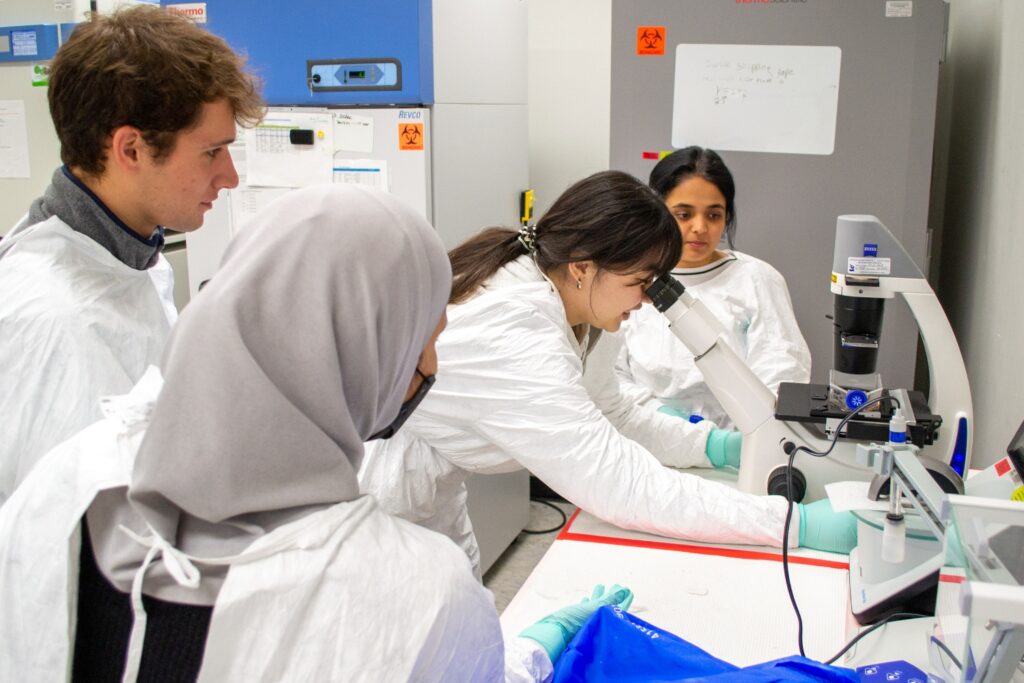
Highly motivated Georgetown B.S. in Human Science students can complete the requirements for the M.S. in Biochemistry & Molecular Biology in one semester after completing the bachelor’s program.

The Master of Science in Biochemistry & Molecular Biology program infuses core concepts of biochemistry and molecular biology as applied to biomedical sciences and biotechnology. The program includes hands-on lab-based courses, advanced methods, and electives, as well as an intensive internship. Through a rigorous and challenging curriculum, students are prepared for future careers and academic endeavors.

Application

HSCI students with a minimum GPA of 3.5 in the major are eligible to apply to this program by January 15 of their junior year. Students who wish to apply should inquire with Sumaira Akber, Assistant Dean, School of Health.

For more information about our program and admissions, please contact us.

Timeline

Undergraduates start taking master’s courses in their senior year, earning the master’s degree in the fall after completing the Bachelor of Science.
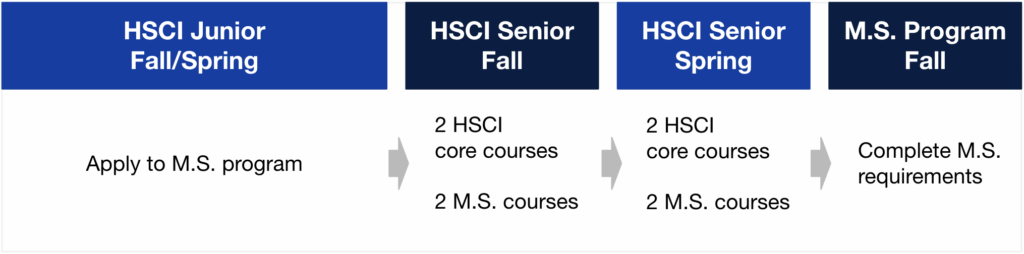
Human Science Accelerated Master's Program Timeline. HSCI Junior Fall/Spring: Apply to M.S. program. HSCI Senior Fall: 2 HSCI core courses, 2 M.S. courses. HSCI Senior Spring: 2 HSCI core courses, 2 M.S. courses. M.S. Program Fall: Complete M.S. requirements.

Degree Plan

Senior – Fall

Course NameCredit(s)
HSCI 4972: Human Science Seminar/Capstone I3
HSCI 4510: Physiological Adaptations4
BCHB 5110: Fundamentals of Biochemistry (for premed track)
or
BCHB 5130: Core Concepts of Biochemistry (better for research or industry focus)
4
BIOT 5260: Core Methods in Biotechnology
or
BCHB 5760: Core Methods of Biochemistry
3
14 Credits

Senior – Spring

Course NameCredit(s)
HSCI 4973: Human Science Seminar/Capstone II3
HSCI 3090: Immunology3
BCHB 5360: Cell Culture Applications: Biotechnology2
BIOT 5008: Lab Applications of Biochemistry3
BCHB 7950: Introduction to Biochemistry Internship0
BCHB 5540: Research Ethics & Integrity0
BIOT 5390: Basic Laboratory Safety0
11 Credits

Master’s – Fall

Course NameCredit(s)
BCHB 7951: Biochemistry/Molecular/Cell Biology Internship4
Advanced lab course (several options)2-3
BCHB 5140: Intro to Bioinformatics1
Graduate electives10-11
18 Credits

Note: The internship is about 20 hours per week and will require careful scheduling with electives

Master’s Courses

Senior – Fall

BCHB 5110: Fundamentals of Biochemistry
4 credits

Survey of fundamental concepts in biochemistry and molecular biology, with emphasis on metabolism.

BCHB 5130: Core Concepts of Biochemistry
4 credits

This is a survey course of core topics in biochemistry and molecular and cell biology, with emphasis on applications to biomedical research and biotechnology.

BIOT 5260: Core Methods in Biotechnology
3 credits

This course introduces the student to the scientific methodology of biotechnology and biochemistry. Topics include analysis, purification, and quantification of nucleic acids and proteins, PCR and qPCR applications, DNA microarrays, next generation sequencing, basic and advanced cloning techniques, protein-protein interactions, molecular diagnostics, protein and nucleic acid therapeutics, molecular vaccines, bionanotechnology, plant biotechnology, and product development.

BCHB 5760: Core Methods of Biochemistry
3 credits

This course is an introduction to core concepts of Molecular Biology. Methods used for analysis, purification, and quantitation of nucleic acids and proteins are discussed in-depth. Problem-solving sessions are included as part of the course.

Senior – Spring

BCHB 5360: Applications of Cell Culture
2 credits

This lecture and laboratory course provides biochemistry, biomedical, and biotechnology graduate students with a basic understanding and hands-on experience on modern applications of tissue/cell culture technology in the study of diverse topics in life sciences, including Molecular Biology, Toxicology, Tumor Biology, Pharmacology, and Biotechnology.

3 credits

This is a comprehensive hands-on, laboratory-based course that introduces students to core techniques such as electrophoretic analysis of nucleic acids and proteins, polymerase chain reaction (PCR), Southern and Western blotting, ELISA, protein purification, tissue culture, DNA cloning, cell culture, and bioinformatics.

0 credits

This course will prepare and guide Biochemistry students for Internship (BCHB 7951) and inform them of the search process.

0 credits

This course will review scientific ethics and integrity, plagiarism and how to submit documents through TurnItIn as well as other program specific ethical issues.

0 credits

This is a required course for any student who will be in a course with a lab component.

Master’s – Fall

4 credits
Prerequisite: BCHB 7950 Introduction to Biochemistry Internship

This is the capstone course in which students will be working to pursue defined objectives in companies in the biotechnology industry and agencies and institutions in the Washington, DC Metropolitan area. Internships can be in basic research, business functions, industrial and biomedical sciences or intellectual property.

1 credit

The sequencing of the human genome that was completed in 2001 and the explosion of “omic data” has accelerated our understanding of basic genetics and how we think of biology. We are now in the “omic” era of molecular biology that has given birth to the new field of Bioinformatics. All this data can be used meaningfully for biological and clinical research only if we can extract the relevant functional information from them and convert biological data into knowledge of biological systems. Fortunately, by using bioinformatics we can make headway in understanding and extracting relevant biological information from these sequences. The aim of this course is to introduce the various tools and resources that are available as applicable to biomedical research. This course is highly experiential with both lectures and “hands-on” sessions.

Visit our regular M.S. pages to find advanced laboratory courses.

Learn More

The Georgetown Difference

Find out what sets our program apart in preparing students for impactful careers.

The Georgetown Difference

Research Opportunities

Learn about research experiences in the M.S. in Biochemistry & Molecular Biology.

Research Opportunities

Career Readiness

Our students benefit from the services of the Biomedical Graduate Education career office, including one-on-one advising, skills workshops, leadership programs and more.