

Accelerated MS in Pharmacology
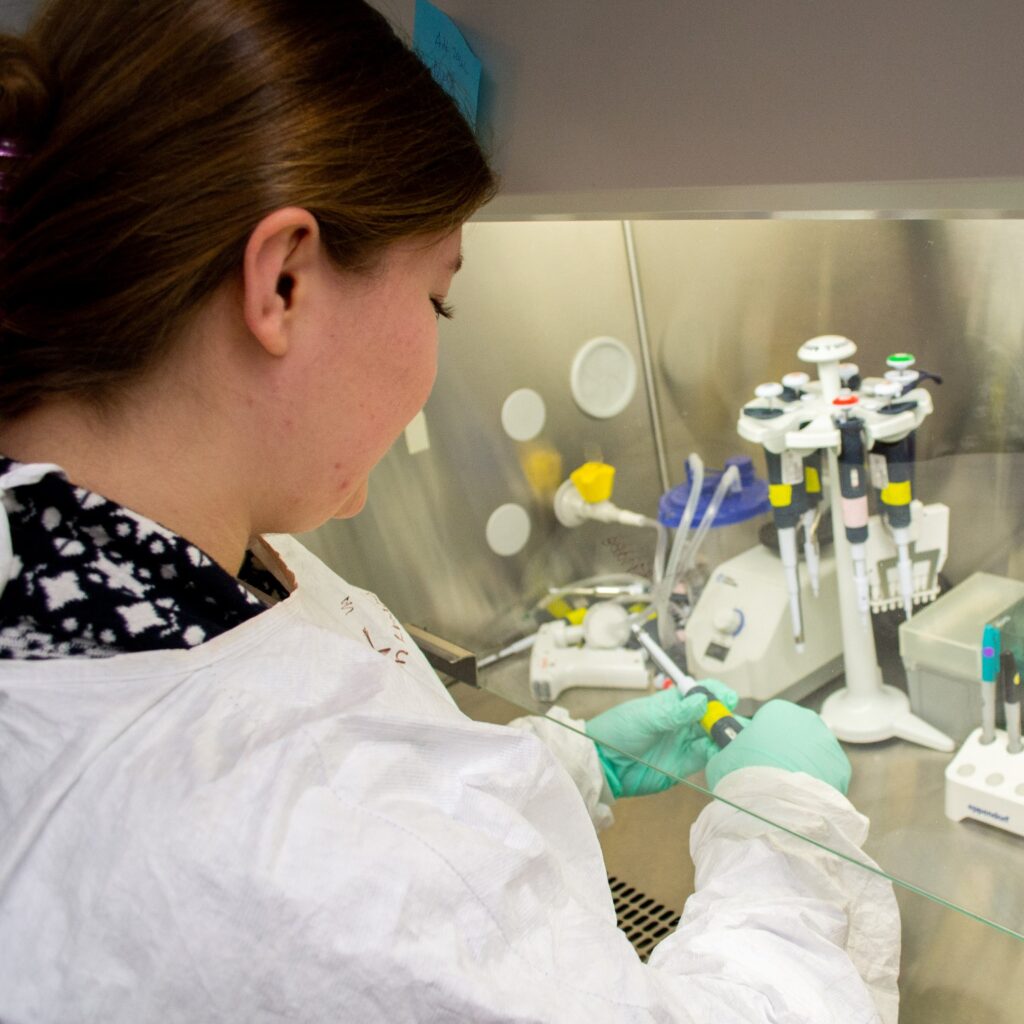
Highly motivated Georgetown BS in Human Science students can complete the requirements for the MS in Pharmacology in one semester after completing the bachelor’s program.
The Master of Science in Pharmacology program offers a foundation of rigorous coursework as well as the option to do research or tailor the curriculum with a selection of elective courses from across our biomedical departments.
Our typical cohort of 15-20 students benefits from a small class size in our main pharmacology courses and receives personalized attention from our faculty, whether in the classroom or in the laboratory. Core courses are taught by a team of departmental faculty and researchers, many of whom also teach in the medical school. In fact, Program Director Dr. John Partridge also directs the Medical Pharmacology curriculum for first- and second-year medical students at Georgetown.
Our alumni continue on to further education (PhD, medical, and other health sciences) or take positions in the public and private sphere, such as at the NIH, FDA, pharmaceutical companies, biotech companies, and university laboratories. Of students pursuing further education, 65% are accepted either during the program or within 1 year of graduation; 85% are accepted within 3 years.
Application
HSCI students with a minimum GPA of 3.5 in the major are eligible to apply to this program by January 15 of their junior year. Students who wish to apply should inquire with Sumaira Akber, Assistant Dean, School of Health.
For more information about our program and admissions, please contact us.
Timeline
Undergraduates start taking master’s courses in their senior year, earning the master’s degree in the fall after completing the Bachelor of Science.
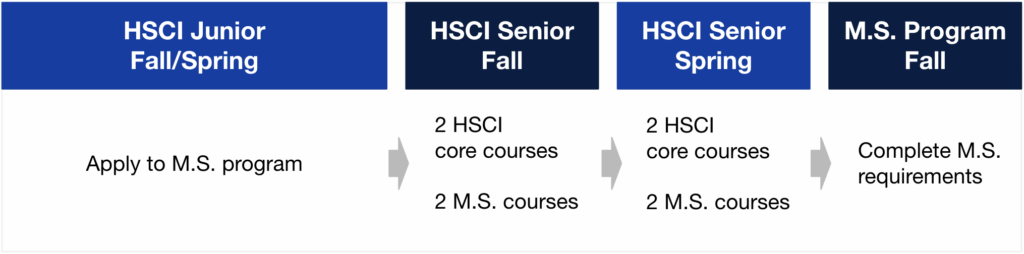
Degree Plan
Senior – Fall
| Course Name | Credit(s) |
|---|---|
| HSCI 4972: Human Science Seminar/Capstone I | 3 |
| HSCI 4510: Physiological Adaptations | 4 |
| PHAR 6000: Principles of Pharmacology | 4 |
| PHSL 6501: Fundamentals of Human Physiology | 5 |
| 16 Credits |
Senior – Spring
| Course Name | Credit(s) |
|---|---|
| HSCI 4973: Human Science Seminar/Capstone II | 3 |
| HSCI 3090: Immunology | 3 |
| PHAR 6001: Graduate Pharmacology | 10 |
| 16 Credits |
Master’s – Fall
| Course Name | Credit(s) |
|---|---|
| PHSL 6534: Cell & Molecular Physiology | 4 |
| PHAR 7950: Pharmacology Research (Research Track only) | 5 |
| Graduate elective(s) | 5 |
| 14 Credits |
Students interested in pursuing a Ph.D. and/or a laboratory-based career are encouraged to take the Research Track. The Pharmacology Research course will immerse you in a “wet lab” experience alongside research professors, postdocs and Ph.D. students.
Pre-health/pre-medical students should take PHSL 6602: Biomedical Career Pathways.
Master’s Courses
Senior – Fall
Senior – Spring
Master’s – Fall
Learn More
Career Readiness
Our students benefit from the services of the Biomedical Graduate Education career office, including one-on-one advising, skills workshops, leadership programs and more.