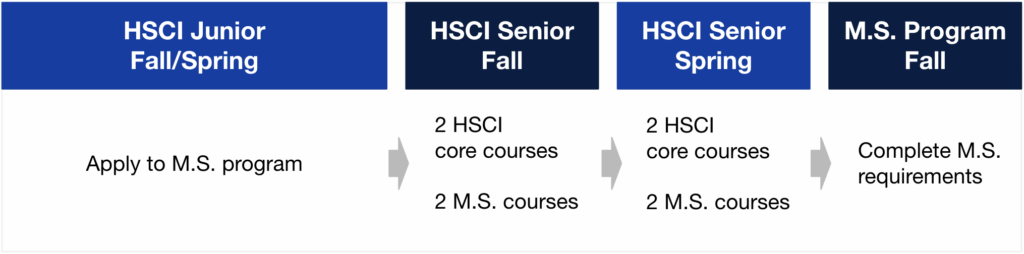
Highly motivated Georgetown BS in Human Science students can complete the requirements for the MS in Tumor Biology in one semester after completing the bachelor’s program.
Students in the Master of Science in Tumor Biology program will learn basic concepts in cancer biology. Topics include biochemistry, pharmacology, prevention and methodology specific to cancer research. Students will be trained in basic laboratory techniques and will complete a research project. Graduates from our program will have a comprehensive understanding of the underlying mechanisms of cancer progression and the existing clinical challenges in treating this disease.
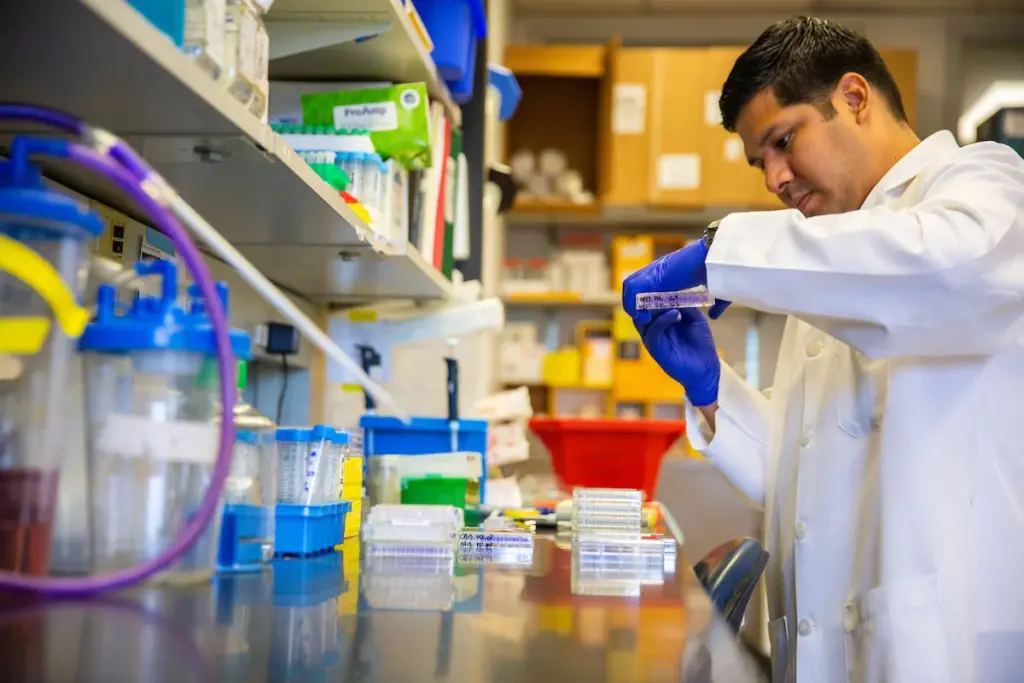
Students are required to complete a Laboratory Research Project (TBIO 7050 and 7060). Students are matched with a cancer researcher at Lombardi Comprehensive Cancer Center based on mutual preferences. In the laboratory, students receive hands-on training for planning and conducting experiments to answer key questions in cancer biology. Common techniques learned include methods in cell culture, molecular biology (analysis of DNA, RNA, proteins or metabolites) or in vivo models of cancer.
HSCI students with a minimum GPA of 3.5 in the major are eligible to apply to this program by January 15 of their junior year. Students who wish to apply should inquire with Sumaira Akber, Assistant Dean, School of Health.
4 credits Course Instructor: Ayesha N Shajahan, Michael Johnson
In this course, students will be introduced to basic biochemical pathways involved in normal human tissue and in carcinogenesis. Furthermore, students will be encouraged to think about how molecular interventions of biochemical pathways could be applied to solve current problems in cancer research.
SYSM 5910: Biomedical Informatics 3 credits Course Instructor: Sona Vasudevan
This new didactic course will provide an overview of the field of Biomedical Informatics from different perspectives. Particular emphasis is given to understanding the basic building blocks, various information resources and the application areas of Biomedical Informatics. Students will learn to explore the process of developing and applying computational techniques for determining the information needs of health care providers and patients.
TBIO 6525: Cancer Genetics 3 credits Course Instructor: Jan M Blancato, Michael Johnson
This course introduces the fundamentals of the molecular genetics and molecular cytogenetics of cancer. In addition, it covers diagnostic, clinical, and population-based aspects of this rapidly advancing field.
4 credits Course Instructor: Robert Glazer , Robert R. Clarke
An overview of the fundamentals of pharmacology as applied to cancer therapy. Mechanisms of action and resistance to chemotherapeutic, antihormonal, biological response modifiers, and new experimental drugs will be emphasized.
4 credits Course Instructor: Michael Johnson, Rebecca B Riggins
Designed to provide students with an integrative overview of mechanisms of growth control & malignant transformation by physical, chemical, & viral mechanisms. Introduction to growth factors, oncogenes, & suppressor genes. Includes an introduction to means of reverting or blocking malignant behavior with particular emphasis on biochemical & molecular mechanisms.
SYSM 5910: Biomedical Informatics 3 credits Course Instructor: Sona Vasudevan
This new didactic course will provide an overview of the field of Biomedical Informatics from different perspectives. Particular emphasis is given to understanding the basic building blocks, various information resources and the application areas of Biomedical Informatics. Students will learn to explore the process of developing and applying computational techniques for determining the information needs of health care providers and patients.
TBIO 6525: Cancer Genetics 3 credits Course Instructor: Jan M Blancato, Michael Johnson
This course introduces the fundamentals of the molecular genetics and molecular cytogenetics of cancer. In addition, it covers diagnostic, clinical, and population-based aspects of this rapidly advancing field.
Our students benefit from the services of the Biomedical Graduate Education career office, including one-on-one advising, skills workshops, leadership programs and more.